



Key Takeaways
- Your credit score shapes your options: It affects loan approvals, interest rates, and how much you can borrow—especially for big loans like housing.
- Payment behaviour matters the most: Even one missed payment can significantly impact your CBS report in Singapore and lower your credit score.
- Improvement can be swift with the right steps: If you’re wondering how to improve your credit score in Singapore, paying down balances or correcting errors in your CBS report can produce results within 1–3 months.
- Stay informed with regular credit score checks: Knowing how to check your credit score in Singapore and reviewing your credit report regularly allows you to catch mistakes early and monitor your progress.
- A low credit score doesn’t close all doors: Since licensed lenders consider your overall financial situation beyond your credit score, you may still get approved for a loan even with an imperfect score.
A low credit score can quietly limit your financial options—affecting loan approvals, borrowing limits, and the interest rates you’re offered—often when you need funds the most. In Singapore, traditional lenders like banks rely heavily on your credit score when deciding whether to approve your application and on what terms.
The good news is that a low credit score is rarely permanent. With the right steps, you can improve your credit score in no time. If you’re wondering how to improve your credit score in Singapore or how to increase your credit score quickly, this guide walks you through proven strategies that actually work.
Quick Summary: Fastest Ways to Improve Your Credit Score
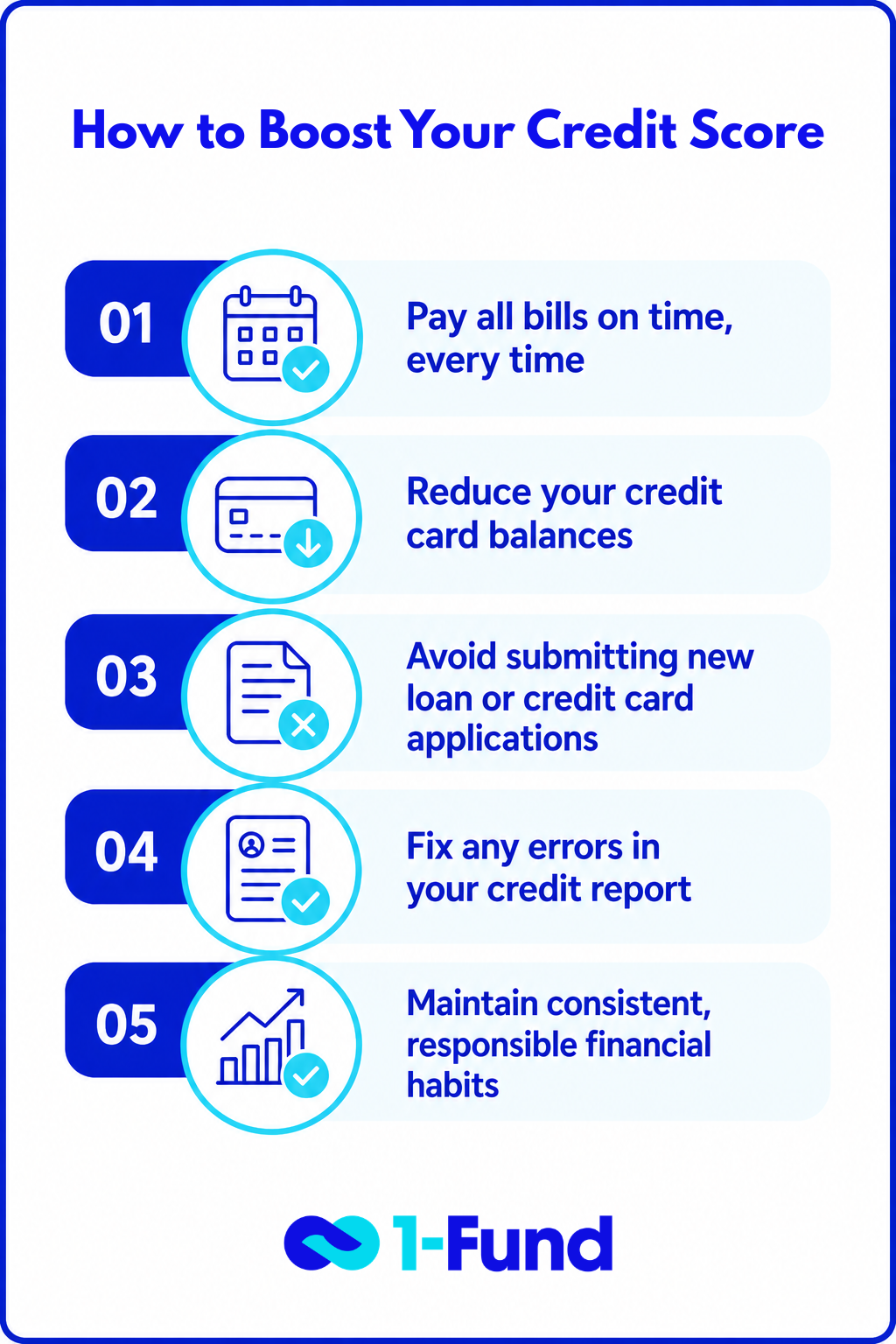
If you’re short on time, here are the habits that make the biggest impact on your credit score:
What Is a Good Credit Score in Singapore?
In Singapore, your credit score is issued by Credit Bureau Singapore and ranges from 1,000 to 2,000. The score reflects your likelihood of defaulting on payment—in simple terms, the higher your score, the lower your credit risk.
CBS groups these scores into three main risk categories:
- High Risk (1,000—1,723): This range indicates the highest risk of repayment default. Borrowers in this category may face difficulty getting approved for traditional bank loans.
- Medium Risk (1,724—1,910): This is considered an average credit profile. Bank approval may still be possible, but terms may be considerably stricter depending on other factors like income and existing debt.
- Low Risk (1,911—2,000): This is the strongest credit range and is generally considered a good credit score in Singapore. If you’re in this category, you have a higher chance of getting approved by banks and may be able to secure better interest rates.
Building and maintaining a strong credit score early and knowing how to clear your bad credit history in Singapore can make a meaningful difference to your future financial options.
How to Improve Your Credit Score Fast in Singapore
If you’re looking into how to improve your credit rating in Singapore, the good news is that your CBS credit score can respond fairly quickly to the right changes. With consistent action, improvements can sometimes be seen within 1 to 3 months.
#1 Pay All Bills on Time (Most Important Factor)
Your payment history is the most influential factor affecting your credit score, and even a single missed payment can significantly impact your CBS report in Singapore.
Because lenders place so much weight on repayment behaviour, consistency matters more than anything else. Setting up GIRO or automatic payments is a simple way to ensure you never miss a due date, especially for smaller bills that are easy to overlook.
#2 Reduce Credit Card Utilisation
How much of your available credit you use also plays a major role. Ideally, you should keep your credit utilisation below 30% of your total limit, as higher usage can make you appear financially stretched.
And yes, this can be the case even if you’re repaying your balance in full each month. Hence, paying down your outstanding obligations is often one of the quickest ways to improve your credit score in Singapore.
#3 Avoid Multiple Loan Applications
Did you know that every time you apply for credit, a hard inquiry on your credit profile is triggered? This means that you will experience small, short-term dips in your credit score with every loan or credit card application, regardless of whether it’s approved.
For this reason, it is generally not advisable to submit several credit applications within a short period. Try to space out your applications and only apply when you really need them.
#4 Pay Down Existing Debt Quickly
Reducing any outstanding debt can give your credit score a significant boost. High-interest balances, especially credit cards, should be prioritised as they tend to weigh more heavily on your financial profile.
As your outstanding balances decrease, your utilisation ratio improves, which in turn helps strengthen your CBS report in Singapore.
#5 Check Your Credit Report for Errors
What many borrowers don’t realise is that inaccuracies in your CBS report can pull down your credit score unfairly. Hence, always make it a point to review your CBS report regularly. Look out for:
- Records of late payments that were actually made on time
- Accounts that don’t belong to you
- Incorrect outstanding balances
If you spot any discrepancies, you can raise a dispute with Credit Bureau Singapore. Rectifying these mistakes can lead to a fairly quick improvement in your credit score.
#6 Keep Older Credit Accounts Open
The length of your credit history also contributes to your overall credit score—older accounts help demonstrate stability and long-term financial responsibility. Conversely, closing accounts too early can shorten your credit history and may weaken your credit score in Singapore. Hence, keeping older accounts open and in good standing can help you maintain a healthier credit profile overall.
#7 Build Consistent Financial Habits Going Forward
Ultimately, long-term credit improvement comes down to consistent habits rather than quick fixes. Aim to pay outstanding balances in full rather than just the minimum amount, keep balances low, and avoid unnecessary borrowing to keep your credit score in Singapore in the pink of health.
How to Check Your Credit Score Singapore (Step-by-Step Guide)

If you’re wondering how to check your credit score in Singapore or how to get your CBS report online, the process is relatively straightforward:
- Visit Credit Bureau Singapore’s official website
- Log in securely using your Singpass
- Pay a small fee of S$8 (before GST)
- Download your credit report once the transaction is confirmed
At this point, you might be wondering if it’s possible to get a copy of your CBS report for free. The answer is yes—you may be eligible for a free credit report in Singapore if you’ve recently applied for a credit facility with a CBS member (such as a bank or financial institution).
So, how does this work? Once your application is processed, you will receive a notification confirming whether it was approved or rejected, along with instructions for redeeming your free CBS credit report. This must be done within 30 calendar days from the date of the notification.
Can You Get a Loan With a Bad Credit Score in Singapore?

Yes! Having a bad credit score doesn’t mean you’re out of options. Unlike traditional banks, licensed lenders do not place a strong emphasis on CBS credit score checks; instead, they assess factors like your current income and job stability. Hence, you may still qualify for a loan with a bad credit score from licensed moneylenders if you’re able to demonstrate your repayment ability.
Final Thoughts: Borrow Smart and Build Your Credit

Improving your credit score in Singapore doesn’t happen overnight, but it’s absolutely achievable with the right approach. If you’ve been searching for ways to improve your credit score or clear a bad credit history in Singapore, the key lies in building consistent, disciplined financial habits.
If you’re considering legal and safe alternatives to banks, licensed moneylenders like 1-Fund offer flexible options tailored to your specific needs. From payday loans to monthly loans and debt consolidation loans, there’s something for everyone. Ready to get started? Apply now or get in touch with us for an obligation-free chat about your options.