



Key Takeaways
- Always verify a lender through the MinLaw Registry of Moneylenders before taking a loan to avoid scams and illegal lending activities.
- Every licensed lender in Singapore has a unique moneylender licence number that borrowers can cross-check against the official registry.
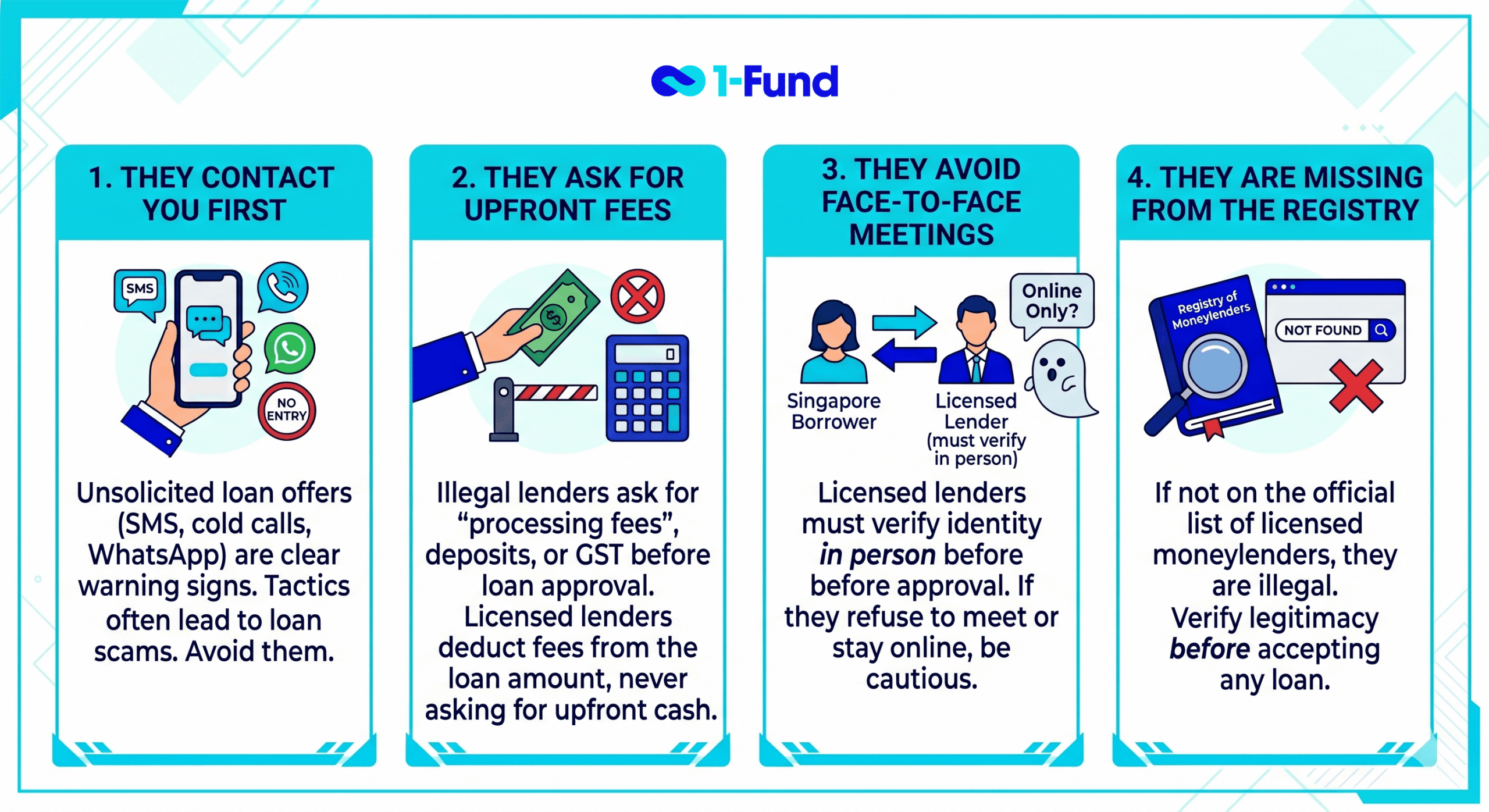
- Common signs of unlicensed moneylenders include unsolicited SMS or WhatsApp loan offers, upfront fee requests, and refusal to meet in person.
- The Moneylenders Act protects borrowers with strict regulations, including an interest rate cap, transparent contracts, and limits on fees and late charges.
- Safe borrowing starts with choosing lenders listed on the Registry of Moneylenders’ official list of licensed moneylenders, carefully comparing loan terms, and understanding your borrower rights in Singapore.
With the rise of loan scams Singapore residents face today, verifying a lender’s legitimacy has become more important than ever. Before signing any loan agreement, borrowers should always verify a moneylender’s licence details to avoid falling victim to illegal operators. In Singapore, the Ministry of Law regulates legal moneylenders through the Registry of Moneylenders, ensuring that licensed lenders comply with strict rules and uphold borrowers’ rights at all times.
Curious? Read on to learn how to check a moneylender’s licence in minutes and protect yourself by dealing only with legal moneylenders that are fully compliant with the Moneylenders Act.
What Is a Moneylender Licence in Singapore?
A moneylender licence is an official legal authorisation—issued by Singapore’s Ministry of Law through the Registry of Moneylenders—that authorises the business to provide legal loans to consumers like you and me, and businesses seeking alternative credit products. Any lender providing loans legally in Singapore must hold a valid licence and comply with the Moneylenders Act. The only exceptions are excluded moneylenders and exempt moneylenders.
Just so you know, the Moneylenders Act regulates how lenders operate, including advertising rules, interest charges, and borrower protection measures. This framework ensures that legal moneylenders follow fair and transparent lending practices.
Each licensed lender is also assigned a unique moneylender licence number, which borrowers can use to confirm the lender’s legitimacy. Licensed lenders must comply with strict government regulations, including providing transparent loan contracts, clear repayment terms, and fair fee structures.
How to Check a Moneylender Licence in Singapore in 5 Minutes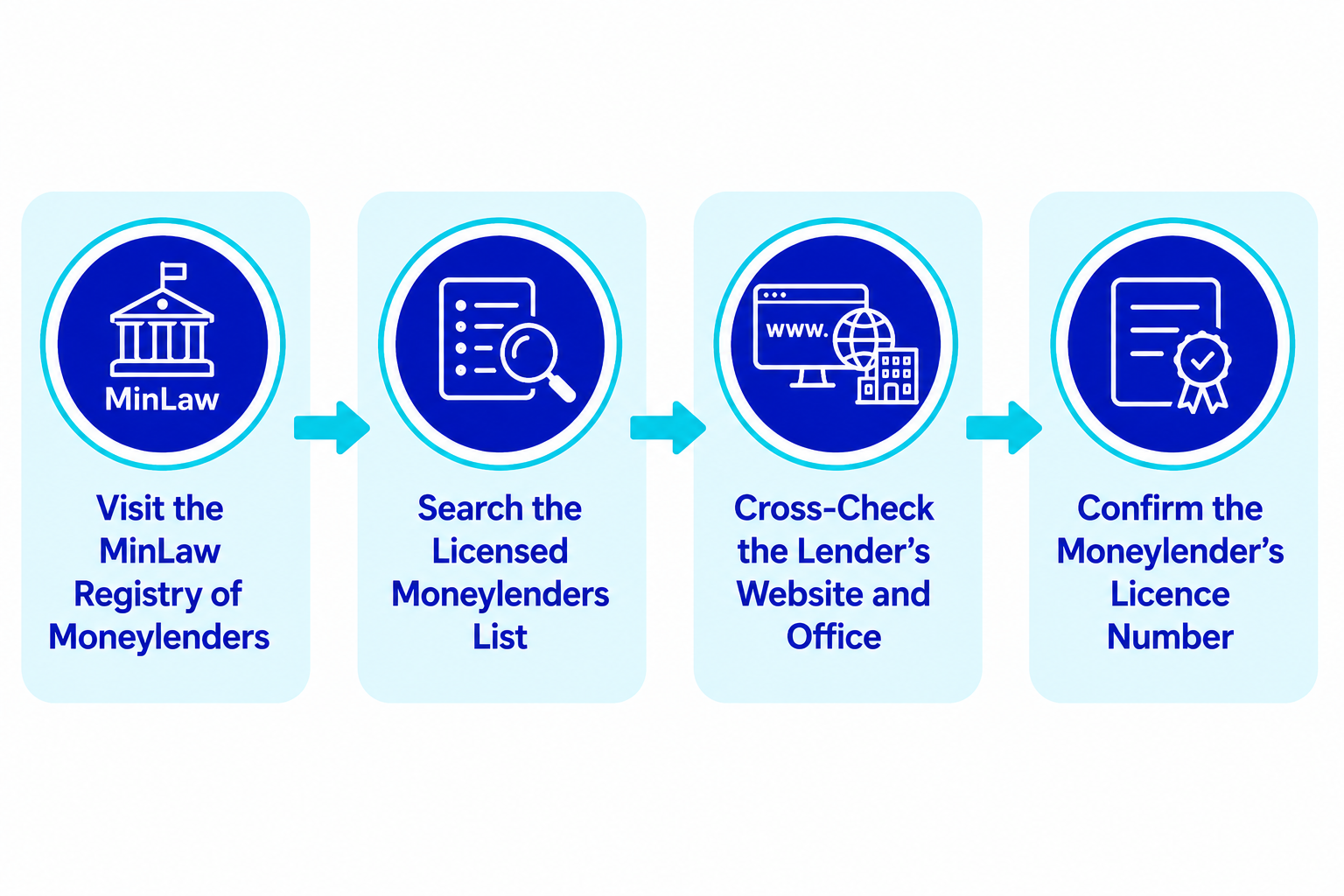
Step 1 – Visit the MinLaw Registry of Moneylenders
The first step in checking a moneylender’s licence details is to visit the MinLaw Registry of Moneylenders website. The Registry publishes the official list of licensed moneylenders in Singapore, allowing borrowers to verify whether a lender is legally authorised to operate.
By conducting this essential check via the Registry of Moneylenders, borrowers can protect themselves from scams, unfair practices, and unlicensed lending activities altogether. There’s even an indication on the official list if any particular lender has had its moneylender licence suspended!
Step 2 – Search the Licensed Moneylenders List
Once you access the Registry of Moneylenders’ licensed moneylenders list, search for the lender’s registered business name. You should verify details such as:
- Business address
- Moneylender licence number
- Official contact number
The official list of licensed moneylenders includes these details for every approved lender (i.e. legal moneylender) in Singapore.
Step 3 – Cross-Check the Lender’s Website and Office
After locating the lender on the Registry of Moneylenders, compare the official details with the lender’s website and office information.
Ensure the office address matches the registered address listed in the Registry. Licensed lenders are only allowed to conduct loan transactions at their approved business premises, making this an important step when you scrutinise and check moneylender licence details.
Step 4 – Confirm the Moneylender’s Licence Number
Every legal lender has a unique moneylender licence number. Borrowers should always cross-check this number against the Registry listing before proceeding with any loan application.
If possible, make a trip to the lender’s office and ask to view their moneylender licence for peace of mind—a legitimate lender that’s fully compliant with the Moneylenders Act will be more than happy to share!
For example, 1-Fund holds Moneylender Licence No. 23/2026, which borrowers can verify directly through the Registry and in person at our office. This is one of the simplest ways to quickly and safely verify a moneylender’s licence information.
Why It Is Important to Check a Moneylender Licence

Hard truth: the number of loan scams Singapore authorities deal with has increased in recent years, with scammers often impersonating legal moneylenders online. Some create fake websites to trick unsuspecting borrowers, while others send SMS or WhatsApp messages offering loans, posing as legitimate businesses.
As it stands, licensed lenders are not allowed to advertise loans via unsolicited SMS messages, WhatsApp chats, or direct messages on social media. If a lender contacts you first in this manner, it is a strong warning sign.
Borrowing from lenders not listed on the official list of licensed moneylenders exposes borrowers like you and me to serious risks, including harassment, hidden fees, and unfair loan terms. Many unlicensed moneylenders operate illegally and do not follow Singapore’s lending regulations.
Taking a few minutes to check a moneylender’s licence details through the Registry of Moneylenders can help borrowers avoid scams and ensure they only deal with regulated lenders.
Key Signs of Unlicensed Moneylenders
Borrower Rights in Singapore and Interest Rate Caps
Singapore’s lending regulations are designed to protect borrowers from abusive practices. Under the Moneylenders Act, licensed lenders must provide transparent and fair loan terms while respecting borrowers’ rights in Singapore.
Borrowers have the right to receive:
✓ Clear and transparent loan contracts
✓ A proper breakdown of fees and repayment terms
✓ Protection against harassment or abusive collection methods
✓ Accurate disclosure of interest charges
The government also enforces an interest rate cap for licensed lenders. These limits include:
- Maximum interest rate of 4% per month (except business loans)
- Late interest is capped at 4% per month (except business loans) on the overdue repayment
- Administrative fees capped at 10% of the principal loan
- Late fees capped at $60 per month
These regulations help prevent predatory lending practices while ensuring borrowers are treated fairly by legal moneylenders.
Tips to Borrow Safely in Singapore
Before applying for any loan, borrowers should take several precautions to protect themselves from scams and illegal lenders.
Tip 1
Always verify the moneylender’s licence details through the Registry of Moneylenders before committing to a loan.
Tip 2
Comparing lenders from the licensed moneylenders list can also help borrowers identify reputable options with transparent terms.
Tip 3
Borrowers should never pay upfront fees before receiving loan approval, especially if payment requests are made through unofficial channels.
Tip 4
It is also important to deal only with lenders listed on the official list of licensed moneylenders to ensure compliance with Singapore regulations.
Understanding your borrower rights can help you make safer, more informed financial decisions.
Conclusion

Verifying a moneylender’s licence is one of the most important steps borrowers can take to protect themselves from loan scams Singapore residents increasingly face today. By using the official Registry of Moneylenders list, borrowers can quickly confirm whether a lender is legally authorised to operate in Singapore. All it takes is a few minutes!
Choosing lenders listed on the official list of licensed moneylenders helps ensure fair terms, transparent fees, and regulated lending practices. Reputable lenders such as 1-Fund are licensed by the Ministry of Law, listed on the Registry of Moneylenders, and operate with absolutely transparent loan processes and a physical office presence.
Before applying for any loan, borrowers should take the time to verify the lender’s legitimacy, review the terms carefully, and consider reaching out or even checking what previous customers have said. Safe borrowing starts with choosing compliant and trustworthy lenders.